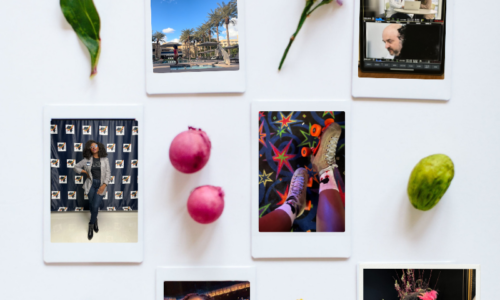
That’s romanticizing your life, taking one moment and making it bigger by slowing down and giving it the attention it deserves.
Now apply that same thought process to your content.
A lot of people will just post and that’s that. One video. One photo. One announcement. Done. But what if you romanticized it? Slowed down that moment. What if you brought people into your world? Showed the behind the scenes? Gave them different angles, different formats, different reasons to care?
That’s a campaign. That’s what PK did with Arizona Tea. And that’s what I do with my clients.
How to Apply Campaign Thinking to Your Work
When I launch a new brand or rebrand for a client, we don’t just flip a switch and hope people notice. We build a series. Over several weeks, we introduce who they are, what they do, how they do it, who they do it for, and what makes them different. It shows up as carousels, videos, stills, quotes, all repurposed from the same core story, with the same goal in mind.
One thing. Multiple formats. One goal. Over time.
Same with my podcast. Each episode doesn’t just get one “it’s live” post. I pull a teaser. Then the next several posts highlight key moments from the conversation: a video clip, a carousel with takeaways, a quote graphic. That’s repurposing with intention. That’s a campaign.
Same with this blog. It’ll show up on my socials. It’ll be in my newsletter. It might become a carousel or a reel. Because I know that not everyone will see every piece of content I put out. And even if they do, they might need to hear it in a different format before it clicks.
That’s one of the most important things to remember: people need to see your message 7 to 11 times before they consider you or recognize you as someone they may want to work with. Doing one thing one time and hoping it sticks? That’s leaving your growth up to chance.
And here’s the real talk: as small business owners, we’re already stretched thin. We’re working on and in the business at the same time. We don’t have the luxury of creating something brand new every single day. So why not get more out of what you’ve already made? Repurposing isn’t cutting corners. It’s being strategic with your time. One piece of content, stretched across formats and across your timeline, does more work for you than a dozen one-off posts ever could.
A Simple Launch Campaign Framework (5 Steps)
If you take nothing else from this, take this:
1. Pick the thing you’re launching. It can be a product, a service, an album, a blog, a speaking engagement, a rebrand, a podcast, anything.
2. Set a goal. How many sales? How many sign-ups? How many downloads? How much engagement? Make it specific.
3. Give it a timeline. Is it a 7-day push like PK? A 4-week rollout? A single launch week? Define the window.
4. Think in formats, not just posts. Can the one thing become a reel, a carousel, a blog, a live session, a story series, a behind-the-scenes? Repurpose it.
5. Bring your community into it. PK didn’t just sell an album. He invited people into a mission. How can you involve your audience in the journey?
Why I’m Studying Local Creators, Not Just Big Brands
One more thing. We often look at big brands to study what’s working, and that’s important. I do it all the time. But I think there’s just as much to learn from the people on the ground. Local Black, brown, and women artists, creators, service providers, and entrepreneurs who are doing brilliant work with what they have.
PK didn’t have a massive marketing budget like the Intels, Intuits or DoorDashes of the world. He had a vision, a clear goal, a creative execution, and a community. And he pulled off something that a lot of bigger artists struggle to do: he made people feel like they were a part of something.
That’s the power of a well-run campaign.
So this might become a series. I want to highlight more of these moments, real launches, real campaigns, real people doing the work in creative ways. Because the lessons are right here in our communities if we pay attention.
Final Thought
The next time you’re about to put something new into the world, pause for a second. Don’t just post it and move on.
Romanticize it. Give it structure. Give it a goal. Think about how you can take that one thing and stretch it across formats and across time. Think about how you can bring people into the journey instead of just announcing the destination.
That’s what turns a single post into a campaign. And that’s what turns a good launch into a great one.
Brilliant job, PK.
Want help building your next launch campaign? Whether you’re launching a new brand, a rebrand, or your next big thing, I’d love to help you build the strategy behind it.
My workbooks walk you step-by-step through brand building, marketing strategy, and more. Grab your workbooks →
Want to experience it for yourself? Check out PK The Poet’s work: